The input is read from the file surreal.in.
The first line contains a positive integer $N$, representing the number of test cases. Each test case is formatted as follows:
The first line is a positive integer $m$, representing the number of trees in the set. The $m$ trees are then provided in the following format:
- A positive integer $n$, representing the number of nodes in the tree, with nodes labeled $1, 2, \dots, n$.
- The next $n$ lines each contain two non-negative integers $l_i$ and $r_i$, separated by a space, representing the labels of the left and right children of node $i$, respectively. If a left (or right) child does not exist, $l_i$ (or $r_i$) is $0$. Leaf nodes satisfy $l_i = r_i = 0$.
The input is guaranteed to form a tree with node $1$ as the root. Note: Node labels are only for input convenience; any isomorphic trees are considered identical.
The $m$ input trees may contain isomorphic trees. If these duplicates are removed (keeping only one of each isomorphic type), they form a set of trees $\mathcal{T}$. You need to determine whether the set $\text{grow}(\mathcal{T})$ is almost complete.
Output
The output is written to the file surreal.out.
The output contains $N$ lines, each representing the answer to the corresponding test case. The $i$-th line should contain the string Almost Complete if the set $\text{grow}(\mathcal{T})$ is almost complete (i.e., only a finite number of trees cannot be generated by it), or No otherwise. Please pay attention to the spelling and capitalization of the output string.
Examples
Input 1
1
1
1
0 0
Output 1
Almost Complete
Note 1
This example contains only one test case, where the set $\mathcal{T}$ contains only a single tree consisting of a single node. Since a single node can have its only leaf node replaced to generate any tree, $\text{grow}(\mathcal{T})$ contains all trees and is naturally almost complete.
Input 2
1
3
3
2 3
0 0
0 0
2
2 0
0 0
2
0 2
0 0
Output 2
Almost Complete
Note 2
This example contains one test case where the set $\mathcal{T}$ contains three trees. It is easy to see that only the tree consisting of a single node is not in $\text{grow}(\mathcal{T})$, so it contains almost all trees and is therefore almost complete.
Input 3
1
2
2
2 3
0 0
0 0
2
2 0
0 0
Output 3
No
Note 3
This example contains one test case where the set $\mathcal{T}$ contains two trees. It is easy to see that for all $n \ge 2$, chain-like trees with $n$ nodes where every non-leaf node has only a right child are not in $\text{grow}(\mathcal{T})$. Thus, there are infinitely many trees not in $\text{grow}(\mathcal{T})$, and $\mathcal{T}$ is not almost complete.
Input 4
See surreal/surreal4.in and surreal/surreal4.ans in the contestant directory.
Output 4
See surreal/surreal4.in and surreal/surreal4.ans in the contestant directory.
Input 5
See surreal/surreal5.in and surreal/surreal5.ans in the contestant directory.
Output 5
See surreal/surreal5.in and surreal/surreal5.ans in the contestant directory.
Input 6
See surreal/surreal6.in and surreal/surreal6.ans in the contestant directory.
Output 6
See surreal/surreal6.in and surreal/surreal6.ans in the contestant directory.
Constraints
All data satisfies: $\sum n \le 2 \times 10^6$, $\sum m \le 2 \times 10^6$, $\max h \le 2 \times 10^6$, $T \le 10^2$. Here, $\sum n$ is the sum of the number of nodes of all trees in all test cases for a given test point; $\sum m$ is the total number of trees in all test cases; $\max h$ is the maximum height of all trees appearing in the test point (a tree with a single node has height 1).
Special properties:
- Property 1: For every test case in this test point, $m \le 4$.
- Property 2: For every test case in this test point, all trees in the set have the same height.
- Property 3: For every test case in this test point, the set contains only chains (every non-leaf node has only one child).
- Property 4: For every test case in this test point, the set contains only trees satisfying one of the following two conditions:
- Every non-leaf node has only one child;
- There are exactly two leaf nodes, they have the same parent, and all other nodes have exactly one child.
| Test Point ID | $N$ | $\sum n$ | $\sum m$ | $\max h$ | Special Property |
|---|---|---|---|---|---|
| 1 | 100 | $\le 1000$ | $\le 1000$ | $\le 1$ | None |
| 2 | $\le 2$ | Property 1 | |||
| 3 | |||||
| 4 | $\le 1000000$ | $\le 1000000$ | $\le 4$ | None | |
| 5 | $\le 5$ | Property 2 | |||
| 6 | $\le 8$ | None | |||
| 7 | $\le 9$ | Property 2 | |||
| 8 | $\le 10$ | None | |||
| 9 | $\le 1000000$ | Property 3 | |||
| 10 | 20 | $\le 1000$ | $\le 100$ | $\le 1000$ | Property 4 |
| 11 | $\le 2000$ | $\le 2000$ | $\le 2000$ | Property 4 | |
| 12 | $\le 100000$ | $\le 100000$ | $\le 100000$ | Property 4 | |
| 13 | $\le 200000$ | $\le 200000$ | $\le 200000$ | Property 4 | |
| 14 | $\le 800$ | $\le 200$ | $\le 800$ | None | |
| 15 | $\le 1000$ | $\le 100$ | $\le 1000$ | None | |
| 16 | $\le 2000$ | $\le 2000$ | $\le 2000$ | None | |
| 17 | 40 | $\le 300000$ | $\le 300000$ | $\le 300000$ | None |
| 18 | $\le 600000$ | $\le 600000$ | $\le 600000$ | None | |
| 19 | $\le 900000$ | $\le 900000$ | $\le 900000$ | None | |
| 20 | $\le 1200000$ | $\le 1200000$ | $\le 1200000$ | None | |
| 21 | $\le 1500000$ | $\le 1500000$ | $\le 1500000$ | None | |
| 22 | $\le 2000000$ | $\le 2000000$ | $\le 2000000$ | None | |
| 23 | |||||
| 24 | |||||
| 25 |
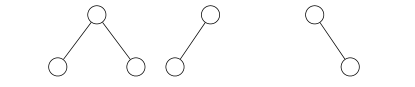
Figure 1. Illustration of tree substitution