This is an interactive problem.
In a 2D plane, there is an unknown line $L$ that is not parallel to the $y$-axis. Let $L(x_0)$ denote the $y$-coordinate of the intersection of line $L$ and the line $x = x_0$.
Given a range $V$, $L$ additionally satisfies the following properties: For any integers $0 \le x, y \le V$, $L(x) \neq y$; $0 \le L(0), L(V) \le V$.
At this point, $L$ divides the set $S = \{0, 1, 2, \dots, V\} \times \{0, 1, 2, \dots, V\}$ into two point sets $S_L = \{(x, y) \in S \mid L(x) > y\}$ and $\overline{S_L} = \{(x, y) \in S \mid L(x) < y\}$, and both are non-empty.
You can make at most limit queries to the interactor. Each query provides integers $0 \le x, y \le V$, and you will receive whether $(x, y)$ belongs to $S_L$ or $\overline{S_L}$.
You need to find a line $L'$ that does not pass through any point in $S$, and $L'$ divides $S$ into the same two point sets as $L$. Formally, $L'$ must satisfy $\forall(x, y) \in S_L, L'(x) > y$ and $\forall(x, y) \in \overline{S_L}, L'(x) < y$.
Implementation Details
Ensure your program starts with #include "plain.h".
You do not need to, and should not, implement the main function. You need to implement the following function:
std::tuple<long long, int, long long, int> Find(int task_id, int V, int limit);task_idrepresents the subtask ID,Vrepresents the range, andlimitrepresents the maximum number of queries.- You need to return a tuple $(k_u, k_v, b_u, b_v)$ representing the line $L'$ given by the equation $y = \frac{k_u}{k_v} x + \frac{b_u}{b_v}$.
- You must ensure $k_u$ and $b_u$ are within the
long longrange, $k_v$ and $b_v$ are within theintrange, and $k_v, b_v > 0$. You do not need to ensure the fractions are in simplest form. It can be proven that under the constraints of this problem, such a $(k_u, k_v, b_u, b_v)$ always exists. - In the final tests, the interactor will call the
Findfunction $T \le 10^4$ times.
You can use std::make_tuple(a, b, c, d) to pack $a, b, c, d$ into a tuple.
You can call the following function to perform a query:
bool query(int x, int y);- You must ensure $0 \le x, y \le V$, and the number of calls to this function within a single test case does not exceed
limit. - When $(x, y) \in S_L$, the function returns
true, otherwise it returnsfalse.
- You must ensure $0 \le x, y \le V$, and the number of calls to this function within a single test case does not exceed
The interactor is not adaptive, meaning $L$ is fixed and does not change during the interaction process.
Examples
Input 1
1 0 3 20
2 4 5 11 11 6
3 4 -11 15 17 5
4 4 2 15 4 5
Output 1
Correct.
8
Note
task_id = 0 indicates that this set of data is an example.
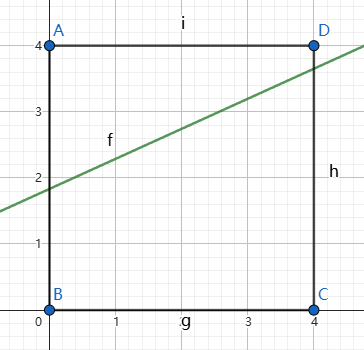
Figure 1: Function graph corresponding to the first data set
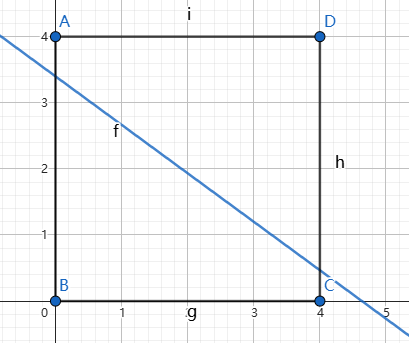
Figure 2: Function graph corresponding to the second data set
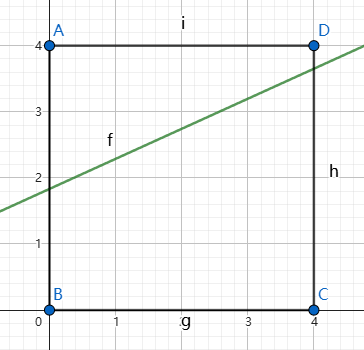
Figure 3: Function graph corresponding to the third data set
Subtasks
For all test data, $2 \le V \le 10^9$, $1 \le T \le 10^4$, $100 \le \text{limit} \le 3,666$.
| Subtask ID | Score | $V$ | $T$ | limit | Special Property |
|---|---|---|---|---|---|
| 1 | 10 | $\le 10^2$ | $\le 10$ | $= 110$ | None |
| 2 | 20 | $\le 10^9$ | $\le 10^3$ | $= 180$ | A |
| 3 | 10 | $\le 10^5$ | $\le 10$ | $= 1,111$ | None |
| 4 | 15 | $\le 10^9$ | $\le 500$ | $= 3,666$ | None |
| 5 | 20 | $\le 10^5$ | $\le 10$ | $= 10^2$ | None |
| 6 | 10 | $\le 10^9$ | $\le 10^4$ | $= 180$ | None |
| 7 | 15 | $\le 10^9$ | $\le 10^4$ | $= 180$ | None |
Special Property A: It is guaranteed that the line $L$ is obtained by shifting $y = \frac{a}{b}x$ upwards by at most $\frac{1}{2b}$, where $0 < b \le V$.