As temperatures drop, the demand for firewood rises. A queue has formed in front of the firewood shop, and at the head of the queue is, naturally, Mr. Malnar.
Lumberjack Darko has $n$ logs of wood in his workshop. Mr. Malnar has a specific request and wants exactly $k$ meters of wood, which puts lumberjack Darko in a bind, but fortunately, he has his trusty saw with him.
The logs are stacked parallel to the shop wall, and Darko will place his saw perpendicular to them and make one powerful cut, sawing through all the logs in his path. Naturally, Mr. Malnar views the shop as a coordinate system where the logs are line segments parallel to the $y$-axis, and the lumberjack cuts all the segments along a line parallel to the $x$-axis. However, Mr. Malnar's eccentric demands do not end there; he requires all the freshly cut logs and, from those cut pieces, exclusively the shorter end. If the ends are of equal length, he will be satisfied with either one, but certainly not both.
Lumberjack Darko only finished vocational carpentry school, so he is not sure how to exactly fulfill all of Mr. Malnar's requirements, which is why he has called you for help! If there exists a line along which Darko can cut the logs such that the sum of the lengths of the shorter ends is exactly $k$, output it. If there is no help for Darko, output $-1$. If there are multiple such lines, output the one with the smallest $y$-coordinate.
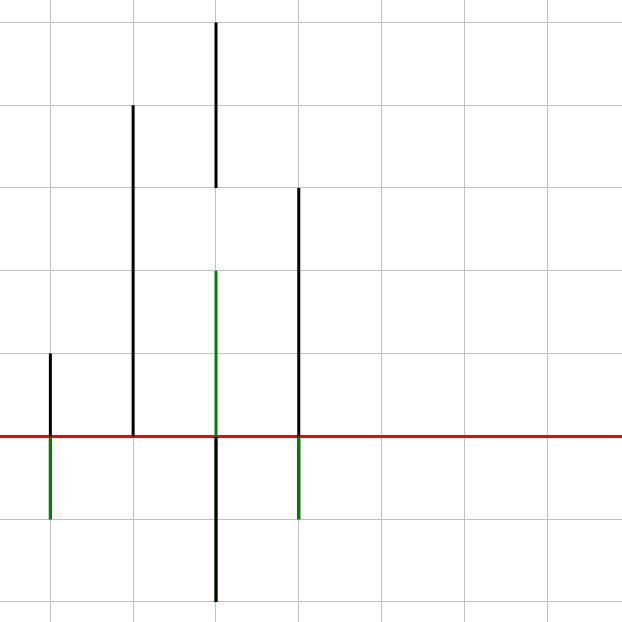
Figure D.1 shows the cutting from the first example of the problem
Input
The first line contains the natural numbers $n$ ($1 \le n \le 10^5$) and $k$ ($1 \le k \le 10^9$) from the problem description.
The next $n$ lines contain the numbers $x_{1_i}, y_{1_i}, x_{2_i}, y_{2_i}$ ($1 \le x_{1_i}, y_{1_i}, x_{2_i}, y_{2_i} \le 10^9, x_{1_i} = x_{2_i}$) which denote the coordinates of the endpoints of the $i$-th log.
Output
In a single line, output the line with the smallest $y$-coordinate that satisfies the problem condition. If no solution exists, output $-1$. Your solution will be considered correct if the absolute and relative error is less than $10^{-5}$.
Examples
Input 1
5 4
1 2 1 4
2 3 2 7
3 1 3 5
3 6 3 8
4 2 4 6
Output 1
3.00000
Input 2
5 4
1 1 1 5
2 1 2 5
3 1 3 5
4 1 4 5
5 1 5 5
Output 2
1.80000